
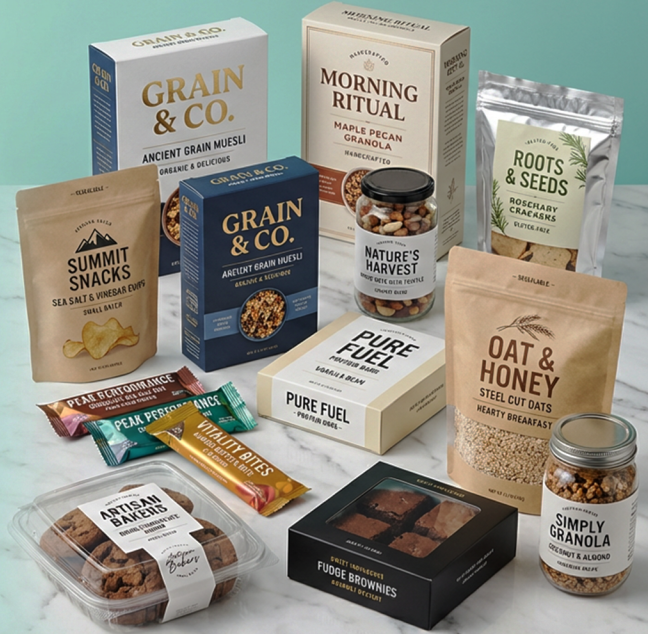
Picture this: you’ve perfected your formula. Your product testing came back stellar. You’ve lined up manufacturing and locked in pricing that works. Then you hop on Fiverr, hire a designer for $800, and think you’re ready to launch.
Six months later, a Whole Foods buyer gives you polite feedback that translates to “your packaging looks amateur.” Your compliance consultant finds three FDA violations that’ll cost $15,000 to fix across your inventory. Meanwhile, your competitor with the professional branding and packaging just closed a deal with Sprouts, and their product costs the same as yours.
The Fiverr route seemed smart when you were bootstrapping. Looking back, it was the most expensive decision you made. Here’s exactly what DIY branding and packaging costs you, and why the math never works in your favor.
SUMMARY: Why DIY Packaging Design Keeps Your Brand Off Retail Shelves
Before we dive deep, here are the core reasons professional packaging design pays for itself:
- Rebranding runs $15,000-$350,000 depending on brand size—3-5x more than professional design upfront
- Packaging redesign costs $10,000-$50,000 for most CPG brands—2-3x more expensive than doing it right the first time
- DIY designs often fail compliance requirements
- Retail buyers reject unprofessional packaging
- Misaligned design kills sales even with great products
- Customer loyalty requires strategic brand experiences
- Competition analysis requires industry expertise
- Visual hierarchy mistakes mean shoppers never notice your product
Now, pick up a cup of your preferred brew, let’s break down exactly what each of these costs you.
Why DIY Packaging Design Leads to Costly Rebranding
Most brands think packaging and branding are the same thing. They’re not. Your packaging is what holds your product. Your branding is your voice, your narrative, your art direction, and yes, your packaging. All work together as a system.
Change your packaging design and you’ve updated one element. Change your brand direction and you’ve triggered a rebrand. Every SKU, every marketing material, every retail conversation now operates from a different foundation. That’s not a $5,000 project—that’s about a $25,000+ overhaul.
The DIY trap works like this: You launch with packaging that’s “good enough.” It gets your product to market. But six months in, you realize it’s not working. Maybe it’s not converting. Maybe retailers are passing. Maybe it just doesn’t match where your brand is headed. Now you’re redesigning from scratch, reprinting inventory, updating all your marketing, and hoping your early customers recognize the new you.
Compare that to the brand that invests in strategic branding upfront. Their packaging might cost more initially, but it’s built on research, positioning, and a scalable brand system. When they add new SKUs, everything flows from the same foundation. When they pitch retailers, their brand story is cohesive. When they need to evolve, they’re refining instead of rebuilding.
The math is brutal but simple. A professional branding and packaging project runs $10,000-50,000 depending on scope. A full rebrand 12-18 months later runs $15,000-500,000 (depending on scope and brand size) once you factor in strategy, design, and all the downstream changes. Add the opportunity cost of lost sales during that first year with subpar packaging, and you’re looking at six figures in the hole.
Getting it right the first time isn’t expensive. Fixing it later is; because of the following reasons.
Reason #1 Poor Packaging Design Fails to Reach Your Target Audience (And Everyone Can Tell)
Walk through Target and look at the skincare aisle. The $12 moisturizers use bold sans-serif fonts, bright colors, and benefit callouts you can read from 10 feet away. The $120 serums use serif typography, muted tones, and minimal text. Both are professionally designed, but they’re speaking to completely different customers.
DIY packaging misses this nuance entirely. You pick colors you like, fonts that look cool, and layouts that seem balanced. But packaging design, for instance, is about instantly communicating to your specific customer that this product is for them, at the price point they expect, solving the problem they have.
Premium products with budget-looking packaging create cognitive dissonance. Shoppers see the $45 price tag, look at the packaging, and think “why does this cost so much?” They put it back. Your product could be genuinely superior, but the package told them it’s not worth the premium. You’re trying to sell a luxury experience in packaging that signals drugstore.
The opposite kills you too. Budget-friendly products in overly premium packaging attract the wrong customer—someone expecting high-end quality at a mid-tier price. They buy once, feel disappointed, and never come back. You’ve broken the trust before they even opened the package.
The gap shows up in conversion rates. Professional packaging converts because it’s designed for a specific customer in a specific context making a specific decision. DIY packaging hopes it works for everyone, which means it works for no one particularly well.
Reason #2 You Will Miss Important Packaging Design Compliance Requirements
Compliance isn’t sexy, but it’s expensive when you get it wrong. Every CPG category has specific requirements—nutrition facts panels, ingredient lists, allergen warnings, net weight declarations, manufacturing codes. The regulations go deeper than most founders realize, down to font size minimums, required placement, and exact wording for certain claims.
Food and beverage packaging must include nutrition facts in a specific format with minimum type sizes. Cosmetic packaging must have ingredient lists in descending order, net contents, manufacturer information, and specific warning labels depending on the product. Cannabis packaging gets even more complex—child-resistant requirements, THC content warnings, state-specific label mandates that vary wildly.
The DIY designer on Fiverr doesn’t know these regulations. Why would they? They’re designing a pretty label, not navigating federal and state compliance frameworks. Professional packaging design agencies working in CPG aren’t compliance consultants, but experience across categories means we catch obvious issues before they become expensive problems. In fact, we can sit down and review yours for free.
NUEX Creative has designed hundreds of food labels, dozens of cosmetic packages, and countless cannabis products. We know what the FDA looks for. We know what retailers require. And because one wrong line of copy can cost a brand millions, we build compliance considerations into the design from day one. More than 50% of food recalls cost over $10 million, with 23% climbing past $30 million and some reaching the $50 million mark. Even without a full recall, something as “simple” as a packaging correction can run $15,000–$35,000 in reprints — and for larger brands, that number can shoot past $150,000. Good design also protects your brand from mistakes you never want to pay for.
Reason #3 Retail Buyers Will Reject You (And They Won’t Tell You Why)
At the time this article was written, Whole Foods doesn’t have a public, broadly accessible official packaging design guide, but they absolutely have standards. So does Target and every major retailer. They see thousands of product pitches a year, and they make snap judgments about which brands are ready for their shelves.
Retail buyers look for specific elements:
Clear brand hierarchy they can spot from across the store.
Benefit communication that works from 6 feet away.
Professional photography or illustration.
Appropriate finishing for the price point.
Structural packaging that shelves well and ships safely.
Information architecture that makes sense to their customers.
They’re also checking whether your brand fits their store aesthetic. Whole Foods skews natural and premium with earthy tones and clean design. Target wants bold, accessible packaging that pops under their lighting. Sprouts looks for organic, wellness-focused design language. Your packaging needs to work in these specific environments, not just look good in your mockups.
The biggest miss with DIY branding is assuming retailers evaluate your product in isolation. They don’t. They’re imagining it on a shelf next to established brands with million-dollar design budgets. If your packaging can’t hold its own in that comparison, you’re not getting the placement no matter how good your product is.
Reason #4 Lack of Strategic Visual Hierarchy will cost you sales
Shoppers spend 3-7 seconds deciding whether to pick up a product. In that window, your packaging needs to communicate brand, product type, and key benefit (in that order). Fail any of these and you’ve lost the sale before they even read the fine print.
Visual hierarchy is the design principle that makes this possible. It’s the strategic arrangement of elements so shoppers process information in the right sequence at the right speed. Professional packaging design obsesses over hierarchy because it’s the difference between getting picked up and getting ignored.
DIY packaging typically fails visual hierarchy in predictable ways. Everything is roughly the same size because the designer wants to fit all the information on the package. The brand name, product descriptor, and benefit callout all compete for attention, so nothing stands out. Important details get buried in paragraph text instead of being called out clearly. The color palette is fine but doesn’t create the contrast needed to pop on shelf.
The conversion impact is measurable. Professional packaging with optimized hierarchy can increase pickup rates by 40-60% compared to designs where everything is fighting for attention.
Reason #5 You will Not Stand Out Enough On Retail Shelves
Your competition isn’t other small brands fighting for attention. Your competition is every product in your category, including the giants with decades of market presence and design budgets larger than your entire company valuation.
Standing out requires understanding what’s already there. DIY packaging usually differentiates accidentally. You pick colors and styles you like without understanding category conventions. Sometimes you accidentally land on something distinctive. More often, you’re just different in ways that confuse customers or signal you’re not actually in the category they’re shopping.
Professional competitive analysis maps the visual landscape of your category and identifies strategic white space. Where are the gaps? What’s oversaturated? What conventions must you follow to be taken seriously, and which ones can you break for impact?
Color strategy alone can make or break your shelf presence. If your entire category uses cool tones and you go warm, you’ll stand out—but you need to understand why you’re making that choice. Maybe warm colors signal something about your product (energy, excitement, comfort) that your competitors aren’t communicating. Or maybe you’re just confusing shoppers who are trained to look for cool tones when buying in your category.
The key is intentionality. Every differentiation decision should answer:
Does this make us more visible?
Does it communicate something meaningful about our brand and product?
Does it attract our target customer specifically?
If you can’t answer those questions, you’re not strategically different—you’re just hoping something sticks.
Reason #6 You’ll Struggle with Building Customer Loyalty And Repeat Sales
You can have the best formulation in your category and still struggle with repeat purchases if your packaging doesn’t create a memorable brand experience. Products get customers once. Experiences get them forever.
Brand experience starts the moment someone sees your product but extends through purchase, unboxing, use, and eventual repurchase. Packaging touchpoints happen at every stage—the shelf appeal that attracted them, the information that convinced them, the unboxing that delighted them, the structure that made use easy, and the design that made them proud to display it.
Unboxing has become a crucial moment because customers photograph and share their experiences. Instagram and TikTok have turned package opening into content. If your unboxing is forgettable, you’ve missed free marketing. If it’s thoughtfully designed with unexpected details, your customers become your marketing team.
This doesn’t mean expensive materials or over-packaging. The best unboxing experiences come from thoughtful touches such as a custom tissue paper, a thank-you note with personality, packaging designed to reveal the product progressively, or structural elements that make opening satisfying rather than frustrating.
Material choices communicate care. Glass bottles feel substantial and premium. Soft-touch coatings add tactile interest. Recycled materials show environmental consciousness. Heavy-wall containers signal quality before anyone even opens the product. Your material selection is a promise about what’s inside.
DIY packaging usually focuses entirely on the label—what it looks like, what it says. Professional packaging design considers the entire experience. How does it feel in hand? What happens when you open it? Is it easy to use? Will customers want to keep it on their counter or hide it in a cabinet? Does it photograph well? Customer loyalty comes from consistently exceeding expectations at every touchpoint of your branding.
Packaging Design Cost Breakdown: DIY vs. Professional Agency
Let’s run the actual numbers on what DIY packaging costs versus professional design over a two-year timeline. The upfront price difference looks stark. The total cost comparison tells a different story.
DIY Route:
- Fiverr or freelance designer: $500-2,000
- Looks acceptable in mockups
- Hidden costs start accumulating:
- Compliance violations discovered after printing: $10,000-$30,000,000 in recalls and reprints
- Lost retail opportunities because packaging isn’t professional: Incalculable but easily six figures in missed revenue
- Rebrand after 12-18 months when DIY isn’t working: $15,000-$500,000
- Lower shelf conversion rates costing 20-40% of potential sales: Ongoing losses
- No brand equity or customer recognition built: Starting from scratch on every marketing dollar
Total DIY cost over 2 years: $30,000-100,000+ when you factor in direct costs and lost opportunities
Professional Route:
- Strategic branding and packaging design: $10,000-$50,000 depending on scope
- What you get for that investment:
- Target audience research and positioning strategy
- Competition analysis and differentiation approach
- Compliance-ready designs that avoid costly mistakes
- Retail-quality packaging that opens buyer conversations
- Scalable brand system that grows with new SKUs
- Visual hierarchy optimized for shelf conversion
- Experience design that builds customer loyalty
Total professional cost: One upfront investment that pays returns across every channel
The ROI math works because professional packaging design impacts multiple revenue drivers simultaneously. Retail placement success increases because buyers take you seriously. Shelf conversion improves because hierarchy and differentiation are optimized. Customer acquisition costs drop because packaging does marketing work. Repeat purchase rates climb because brand experience creates loyalty. Premium pricing becomes justifiable because perceived quality matches actual quality.
What a Packaging Design Agency Does: Services and Strategic Value
The real value in working with a CPG design agency like NUEX Creative happens in the strategic work that comes before any design files get created.
Strategic Foundation: Professional brand and packaging design starts with positioning. Who exactly are you selling to? What problem are you solving? How do you differ from the 47 other brands in your category? What price tier are you competing in? These aren’t design questions—they’re business strategy questions that inform every design decision that follows.
Target audience research goes beyond demographics. We’re looking at psychographics—what your customers value, what visual cues they respond to, what shopping behaviors they exhibit, what trust signals they require. A 35 year-old buying premium skincare has different expectations than a 35 year-old buying budget skincare, even though they’re the same age.
Competition audits map your category’s visual landscape and identify strategic opportunities. We go beyond looking at what your competitors are doing. We analyze why they’re doing it, what’s working, what’s saturated, and where the white space exists. This research directly informs your differentiation strategy.
Design Execution: The design work you see—colors, typography, layouts, imagery—is built on that strategic foundation. Every choice serves a purpose. Blue communicates trust and stability, which might be perfect for a health supplement but wrong for an energy drink. Serif fonts signal tradition and premium positioning. Bold sans-serifs communicate modern and accessible. These aren’t aesthetic preferences; they’re strategic selections.
Technical Expertise: Professional agencies understand the production realities that DIY designers miss. We know what printers can actually produce versus what looks good on screen. We build dielines correctly so your packaging actually folds and closes properly. We specify materials that are available at your volume versus exotic options that require minimums you can’t meet.
Compliance knowledge across categories means we catch issues in design that would cost you thousands after printing. We’re not compliance consultants, but we’ve designed enough food labels, cosmetic packages, and cannabis products to know what the FDA requires and what retailers expect.
NUEX Creative’s Approach: We specialize in CPG categories—food and beverage, beauty, supplements, alternative medicine as well as cannabis and hemp—where packaging directly impacts retail success. Our process isn’t just design; it’s competitive intelligence. We reverse-engineer what your top competitors are doing and identify the specific design elements that will help you win shelf placement and customer attention.
This is strategic consultancy using design as the tool. We’re not asking “what do you want your packaging to look like?” We’re asking “what market share do you want to capture, and what design strategy gets you there?” The output is packaging that does the work of sales, marketing, and brand building simultaneously.
Stop Losing Money to DIY Packaging Design
The DIY packaging decision makes sense emotionally—you’re bootstrapping, watching every dollar, trying to get to market fast. But the math never works out. The $2,000 you save upfront costs you $50,000 and lost opportunities, compliance mistakes, and eventual rebranding over the next 18 months.
Your packaging isn’t a necessary evil or a cost to minimize. In CPG, your packaging is your sales team working 24/7 on retail shelves. It’s your marketing materials in customer hands. It’s your brand story told in 3 seconds. It’s the difference between getting picked up or passed over. It’s the reason Whole Foods takes your meeting or sends a form rejection.
If you’re ready to stop leaving money on the table with DIY design, let’s talk.